


What 1,179 Global Professionals Told Us About Culture, Training, and the AI Frontier
For more than two decades, RW3 CultureWizard has been a global leader in cross-cultural intelligence, trusted by more than 5 million learners across 500+ organizations worldwide.
As learning continues to evolve, RW3 is focused on expanding how those capabilities are delivered so they are more accessible, actionable, and aligned with how work happens today.
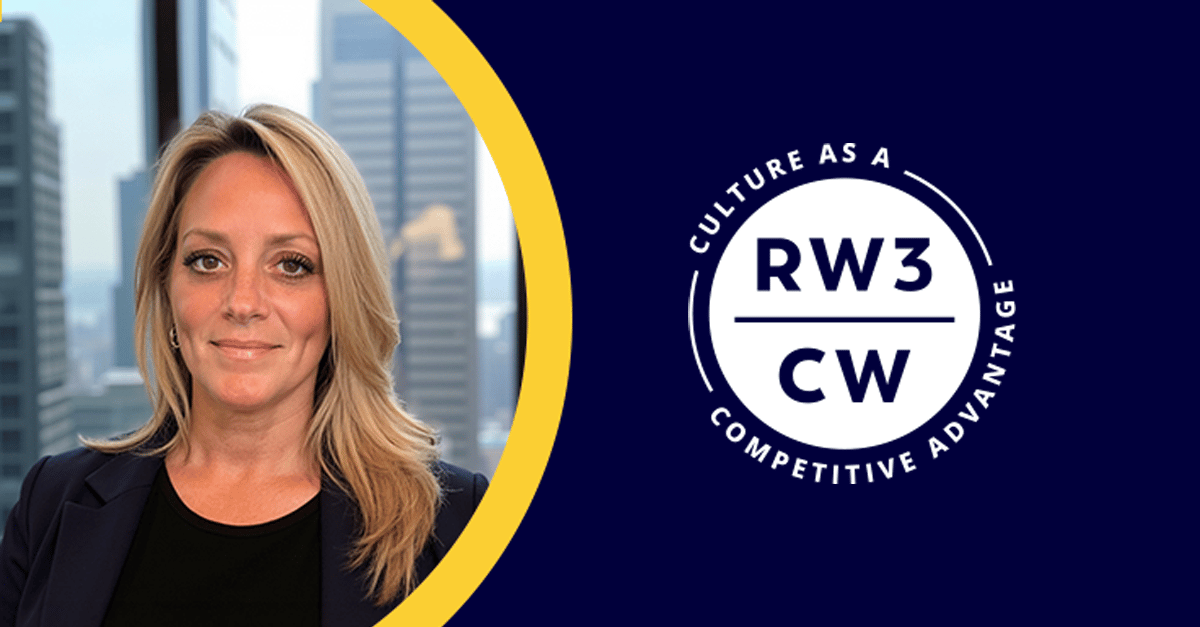
To support this next phase, we are delighted and so fortunate to have Amy Vaas join RW3 as Chief Strategy Officer. Amy brings deep expertise in shaping strategy, positioning, and growth in complex, high-performance environments. In her role, she will lead RW3’s direction across product positioning, market strategy, and growth. She will also guide how the firm continues to evolve its offerings and go-to-market approach.
I sat down with Amy to discuss her background, her vision, and her goals as we move into this next phase, which is about turning cultural intelligence into a competitive advantage.
Q: What is your background and what drew you to the cultural intelligence space when you were at PwC?
Amy: My background has always sat at the intersection of leadership, organizational transformation, human behavior, and business performance.
During my 16 years at PwC, I had the opportunity to work across corporate restructuring, leadership and development strategy, executive coaching, and large-scale initiatives focused on culture, teaming, engagement, and ultimately global well-being and performance. That experience gave me the opportunity to see organizations from many different angles and, over time, I kept noticing the same thing: many challenges that appeared operational on the surface were actually cultural underneath.
Organizations often believe they have a certain culture because of values, leadership intentions, or messaging. But employees experience culture very differently. They experience it through communication, trust, accountability, leadership behavior, decision-making, and day-to-day interactions.
That disconnect fascinated me.
As work became more global, matrixed, and fast-paced, I also saw leaders being asked to deliver more, keep teams steady, and make important decisions while information and priorities were constantly shifting around them.
At the same time, employees were paying attention to signals constantly. They were watching how leaders communicated, how decisions got made, whether behaviors matched intentions, and what people actually experienced inside the organization.
That’s what drew me deeper into cultural intelligence. I started seeing it less as a stand-alone topic and more as a capability that directly shapes leadership effectiveness, execution, team performance, and organizational health.
Q: Why did you choose RW3 CultureWizard as the cultural provider when you were at PwC?
A: What initially drew me to RW3 was the breadth of the work and the way it approached culture. It looked at culture across countries, within teams, through leadership dynamics, and through the everyday interactions that shape how people actually work together.
What I appreciated was that the focus was always on people. The tools helped individuals better understand themselves, understand others, and navigate different working styles and perspectives more effectively.
RW3 became one of the tools I relied on regularly. I used it personally, with teams, and in leadership and training environments because it gave people practical ways to build self-awareness and improve how they worked together.
I also saw that it met a real need. It gave people practical insight into behaviors, communication styles, and working preferences in ways that felt immediately relevant and actionable. People could recognize patterns, build skills, and apply what they learned right away in how they led, collaborated, and worked together across cultures and within teams.
Even then, it felt clear to me that cultural intelligence was becoming much more than a “nice to have.” I saw it as a practical capability that helped people work more effectively together and shaped how organizations communicated, collaborated, and ultimately delivered results day-to-day.
Q: How has your background in strategy and growth shaped how you think about this role?
A: Hmmm. Good question. I’d say everything has led me to this point in my career. The experiences I’ve had, the environments I’ve worked in, the challenges I’ve helped organizations navigate, and the skills I’ve built along the way have all shaped how I think about this work.
Over time, I’ve developed a real appreciation for both human potential and the environments that either support people or limit what’s possible. I’ve seen firsthand that strategy alone doesn’t create outcomes. Human capacity, leadership alignment, and an organization’s ability to adapt through change often make the biggest difference.
As I thought about how I wanted to continue contributing, I became increasingly interested in helping organizations create environments where people can communicate, collaborate, navigate complexity, and realize more of their potential in ways that support both people and organizations.
That’s one of the reasons RW3 felt so compelling to me. The products, tools, and experiences already in place are practical and proven, and they sit directly at the intersection of culture, leadership, communication, and the realities of work today.
That’s one of the things that made this opportunity with RW3 especially compelling to me. The company already has a really strong foundation and deep expertise. What excites me now is thinking about how we continue building on that and shape the next phase of growth in ways that are more measurable, scalable, and integrated into how people actually work day-to-day, while also using technology and AI in thoughtful ways.
Q: What do you see as RW3 CultureWizard’s biggest opportunities in its next phase of growth?
A: One of the biggest opportunities I see for RW3 is connecting cultural intelligence directly to the decisions organizations are already trying to make around leadership effectiveness, organizational health, and long-term performance.
That’s actually part of what brought RW3 and me back together. Through my consulting work, we started collaborating on The Corporate Culture Accelerator, a framework designed to give organizations a clearer picture of what’s actually happening inside their culture, not just what they intend or communicate. That work reinforced for me how much demand exists for practical, actionable solutions that help organizations better understand how work is actually happening, build meaningful skills, and connect those insights to real business outcomes.
What I keep seeing is that leaders today are dealing with a lot. Teams are moving faster, work is more distributed, priorities shift quickly, and people are being asked to adapt constantly. There’s a growing need not only for better visibility into how people are working together, but also for practical ways to help leaders and teams build skills that help them work more effectively through all of it.
That’s where I think RW3 has a real opportunity. As information becomes easier to access and work continues to evolve, helping people turn insight into action and strengthen how they work together becomes even more important, especially as organizations move faster and teams are asked to keep adapting while delivering against business priorities.
Q: How can cultural intelligence move to become a genuine competitive advantage?
A: I think cultural intelligence becomes a competitive advantage when organizations realize that culture isn't happening around the work. It’s shaping how the work gets done every day.
Organizations don’t usually struggle because they lack ideas or strategy. More often, they struggle because execution becomes harder than expected. Priorities compete, teams become overloaded, communication gets harder, and complexity starts building in ways people don’t always see right away.
What often is uncovered, or what sits underneath those challenges, are things like leadership behaviors, culture, trust, and an organization’s ability to adapt and move through change effectively.
Those things can sound soft, but they show up in very real ways through speed, collaboration, retention, and ultimately an organization’s ability to deliver on its priorities.
That’s where cultural intelligence shifts from being a nice-to-have into something much more practical and operational.
Q: How do you see RW3 CultureWizard’s offerings as reflecting the realities of work today, including hybrid teams, distributed workforces, and AI-assisted workflows?
A: Work today just looks very different than it did even a few years ago. People are collaborating across time zones, cultures, functions, and digital platforms constantly. At the same time, many of the ways people used to naturally build relationships, read a room, or stay connected have changed.
That’s actually where I think RW3 becomes even more relevant. The capabilities we focus on are the things organizations are struggling with most right now because they shape how people work together day-to-day and can’t simply be automated.
RW3 has spent more than 25 years building practical tools, learning experiences, instructor-led programs, and real-time resources that support those capabilities at scale. We’ve supported more than 5 million learners globally, and I think that combination of flexibility, human connection, and practical application matters because organizations need more than information. They need ways to help people build skills and apply them in real work environments.
"The question I find most interesting isn’t whether organizations will use AI. They will. It’s whether they’ll invest equally in the human capability required to use it well.”
Q: What do you wish more leaders understood about the ROI of cultural intelligence?
A: I wish more leaders understood that culture already impacts business performance, whether organizations are intentionally managing it or not.
The effects often show up operationally first: communication breakdowns, slower decision-making, disengagement, inconsistent leadership experiences, or teams struggling to stay aligned and move work forward. Over time, those things start to show up more broadly in speed, retention, customer experience, and ultimately business results.
“Culture influences how work actually happens inside an organization.”
Organizations that invest in cultural intelligence often create stronger environments where people can adapt, work through challenges more effectively, and continue moving forward together, especially during periods of change and pressure.
I also think employees increasingly evaluate organizations through their day-to-day experience of leadership, trust, communication, growth, and alignment, not simply what's written in values statements or company messaging.
To me, that makes cultural intelligence a much more practical and strategic business conversation than many organizations realized even a few years ago.
Q: What excites you most about this work right now?
A: What excites me most is that we're at a moment where organizations are being pushed to rethink long-standing assumptions about work, leadership, and performance.
For years, many systems were designed around efficiency and output. Now there’s a real opportunity to ask bigger questions around how people learn, grow, adapt, and realize more of their potential inside organizations.
I’m also fascinated by what becomes possible as technology continues to evolve. AI is going to change how information is accessed and how work gets done, but I think it also creates an opportunity to become more intentional about the human side of performance and how people actually experience work.
What’s especially exciting to me is the opportunity to create environments where people and organizations can operate at a high level while continuing to evolve, adapt, and bring out more of what people are actually capable of.
To me, that’s where the future of work starts to get really exciting.
Q: What do you hope the business environment looks like five years from now because of the work RW3 CultureWizard is doing today?
A: I hope we see organizations operate with a stronger understanding that culture is not separate from business performance - it is business performance. It shapes how people lead, communicate, make decisions, navigate change, and ultimately how work gets done.
We’re entering a period where work is becoming more complex, more distributed, and increasingly influenced by AI and rapid change. In that environment, I think the organizations that lead will be the ones that invest not only in technology, but also in leadership effectiveness, adaptability, and human capability.
I hope more companies move beyond outdated models that prioritize output at the expense of long-term effectiveness and instead build environments where high performance, trust, alignment, growth, and human potential can coexist.
That's what we're building toward at RW3. Through stronger insights, scalable tools, leadership development, and approaches like The Corporate Culture Accelerator, we help organizations understand what's happening beneath the surface and create the conditions for stronger decisions, healthier ways of working, and better outcomes.
“The organizations that lead won't only invest in technology. They'll invest in human capability too. “