





Why Smart Teams Still Misunderstand Each Other
I've spent decades working with multinational organizations on the complex, deeply human challenge of developing leaders who can operate effectively across borders.
What I’ve learned? Most companies are still thinking too small. Building a global leadership development strategy requires more than occasional events; it requires a continuous effort that really builds cultural competency.
The global business landscape demands leaders who can navigate cultural complexity, inspire diverse teams, and deliver results in environments that are constantly shifting. So how do you build a global leadership development strategy that is rigorous, scalable, and genuinely prepares people for the world as it is, not the world as it was last year or the year before?
What A Strong Leadership Pipeline Needs
A strong leadership pipeline strategy requires visibility. That means knowing who is ready now, who will be ready in 18 months, and where the critical gaps are located. Without that clarity, succession planning is guesswork.
For organizations running a multinational leadership program, the stakes are even higher. You're not just developing skills; you're shaping mindsets. Leaders who thrive globally need cultural agility, the ability to influence without authority, and the resilience to lead through ambiguity. That doesn't happen in a two-day seminar. It happens through sustained, structured development embedded in the flow of real work.
5 Practical Tips For HR
1. Anchor your strategy to business outcomes
Start by asking: What business problems do we need leaders to solve in the next few years? Map your competency framework to those answers. Development that isn't connected to real organizational priorities is rarely sustainable.
2. Build a pipeline before you need it
Identify your high potentials at every level, not just senior roles. A leadership pipeline strategy that only looks at the top will always be one unexpected departure away from a crisis.
3. Design for cultural context, not cultural conformity
Your multinational leadership program should adapt its delivery and expectations to local realities. That means involving local HR partners in program design, building in cross-cultural peer learning, and evaluating leaders on cultural agility as a core competency.
4. Move to continuous development
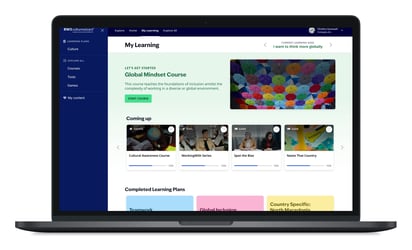
The most effective global organizations don't rely solely on annual leadership cohorts. They embed development into everyday work through stretch assignments, cross-regional project teams, and coaching touchpoints that keep momentum between formal programs. Leverage your platform's nudge and coaching features to make this sustainable.
5. Measure what matters—and report it to the business
Track pipeline fill rates, internal promotion ratios, and retention of high-potentials by region. Then bring those metrics to the executive table. When HR speaks the language of business outcomes, leadership development stops being a cost center and starts being a strategic investment.
The organizations that get this right share one thing in common: they treat leadership development as a business-critical system, not a talent perk. With the right tools, the right data, and the right intentionality, you can build a leadership pipeline that is ready for what's next, wherever in the world that happens to be. See what this looks line in action in our next webinar:



.png?width=500&height=500&name=2026-08_Block-Hero_The%20Managers%20Playbook%20for%20AI%20(1200%20x%20600%20px).png)