

Through the Looking Glass: Rethinking Inclusion Across Cultures
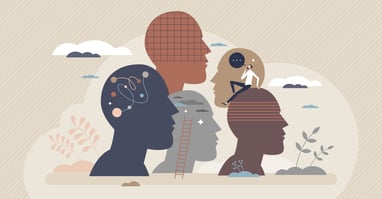
Neurodiversity: The natural variation in how human brains process information, encompasses a wide range of conditions including ADHD, autism spectrum disorder (ASD), dyslexia, and other learning differences. People with these conditions bring genuine strengths to the workplace: hyperfocus, pattern recognition, creative problem-solving, and the ability to see what others miss. Yet they have long navigated professional environments designed around a narrow definition of "typical" cognitive function.
Artificial intelligence is beginning to change that dynamic in meaningful ways, and the data is compelling.
What the Research Shows
A recent study from the UK's Department for Business and Trade found that neurodiverse workers were 25% more satisfied with AI assistants than their neurotypical colleagues and were significantly more likely to recommend these tools to others. This is not surprising when you consider that generative AI excels at the very tasks that have historically been most challenging for many neurodiverse individuals: organizing information, managing communication, supporting executive function, and reducing cognitive load.
Research also shows that neurodivergent individuals can be up to 30% more productive than neurotypical colleagues in the right environment. In fact, EY's Neuro-Diverse Center of Excellence found that in inclusive settings, neurodivergent professionals demonstrate a 31% increase in cybersecurity proficiency and a 20% increase in AI and big data skills. These are precisely the capabilities organizations need most in today's economy.
AI as a Cognitive Co-Pilot
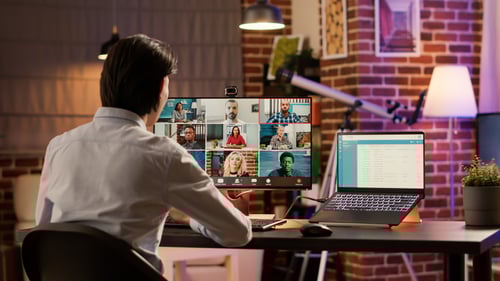
The practical applications are already here. For employees with ADHD, AI scheduling assistants and meeting transcription tools can synthesize hours of discussion into structured summaries, break complex projects into sequenced tasks, and provide the kind of executive function support that once required significant human coaching.
For professionals on the autism spectrum, AI communication tools can help decode ambiguous language, draft responses to complex interpersonal situations, and provide a low-pressure space to rehearse difficult conversations. For those with dyslexia or other learning differences, AI writing assistants go far beyond spell-check, offering real-time coaching, stronger phrasing suggestions, and speech-to-text capabilities that allow ideas to take center stage.
Future-Proofing Talent Requires Intentionality
AI is a powerful enabler, but not a passive one. Different neurodiverse conditions can have competing needs, and algorithms trained on biased data can inadvertently reinforce the very barriers they are meant to remove. Organizations must also ensure that employees never feel pressured to disclose a diagnosis in order to access support. The most effective approach is to co-design AI accommodations with neurodiverse employees, offer choice-based frameworks, and treat this as an ongoing practice rather than a one-time deployment.
We are at a genuine inflection point. For the first time, technology is adapting to people rather than demanding people adapt to it. For neurodiverse professionals who have long had to work around systems not built for them, that shift carries real significance.
That same principle—building systems around how people actually think and work—is what separates good teams from truly great ones.
If you want to know how to work better with AI, then sign up to get access to our new course: